
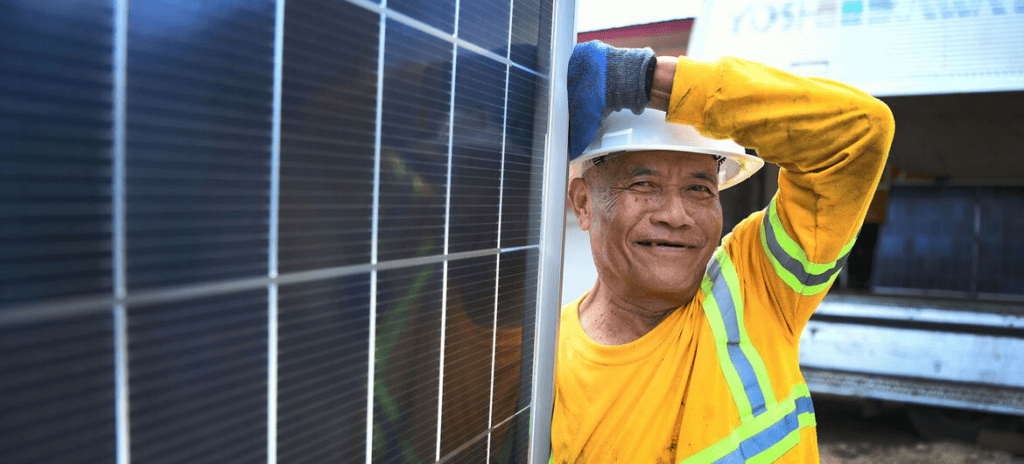
© UNDP | A worker installs solar panels in Lanao del Sur in the Philippines.
Why are critical minerals suddenly at the centre of global politics?
The story in 60 seconds
Every electric vehicle, wind turbine, solar panel, smart phone; they all depend on minerals extracted from the earth.
As countries accelerate the transition to clean (non-fossil fuel) energy, demand for minerals such as lithium, cobalt, nickel, copper and graphite is rising rapidly.
For many countries, this presents an unprecedented economic opportunity.
But in some places, competition over these resources has fuelled conflict, corruption, environmental damage and human rights abuses.

This week, the UN Security Council is asking a fundamental question:
Can the minerals powering the green transition also become a foundation for peace and sustainable development?
Five questions
What are critical minerals?
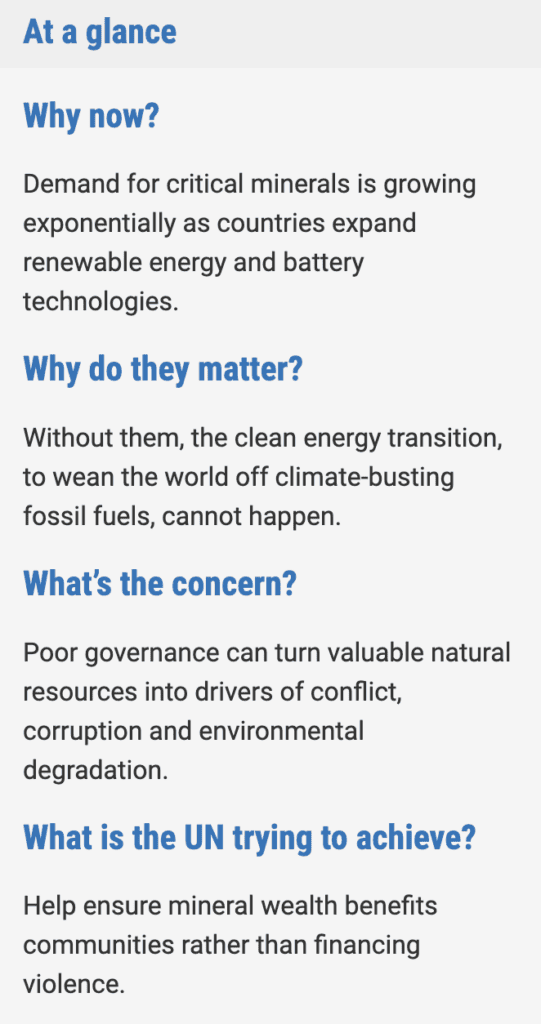
Critical minerals are essential ingredients in many modern technologies, including:
- Electric vehicle batteries
- Wind turbines
- Solar panels
- Electricity grids
- Smartphones and electronics
Without them, many clean energy technologies simply would not exist.
Where are they found?
Large deposits exist across Africa, Latin America and parts of Asia.
For many producing countries, they represent an enormous opportunity to create jobs, diversify economies and generate public revenue.
But success depends on how these resources are managed.
Why is demand growing so quickly?
The global energy transition is accelerating.
- Electric vehicles require around six times more mineral inputs than conventional cars.
- Offshore wind facilities require around 13 times more mineral resources than gas-fired power plants.
- Demand for many critical minerals is expected to triple by 2030.
Many analysts now compare their strategic importance to oil during the twentieth century.
Isn’t mining bad for the environment?
Mining is essential, but it also comes with significant environmental costs if poorly managed.
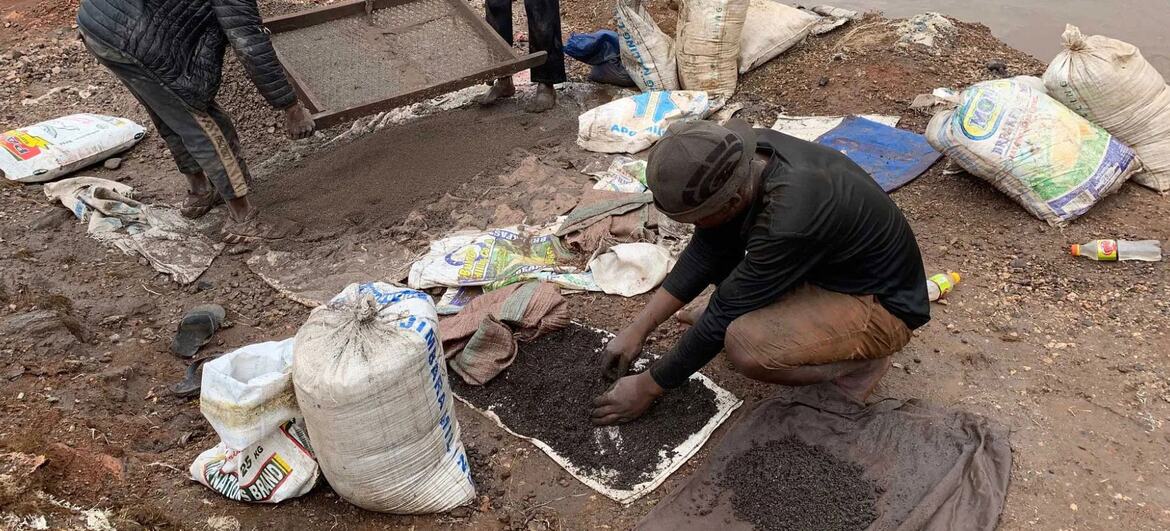
Poorly regulated mining can contribute to:
- Deforestation
- Water pollution
- Biodiversity loss
- Soil degradation
- Greenhouse gas emissions
Many deposits are also located close to Indigenous communities and environmentally sensitive ecosystems.
The challenge is not whether to mine, it is how to mine responsibly.
Why is the Security Council discussing this?
Natural resources have long played a role in conflict.
The Council is examining concerns that:
- Armed groups control valuable mineral deposits.
- Illegal mining finances conflict.
- Criminal networks profit from smuggling.
- Weak governance fuels instability.
The broader question is whether growing global demand for critical minerals could increase geopolitical tensions – or instead become a driver of peace and development.
Key UN take
“A world powered by renewables is a world hungry for critical minerals.”