
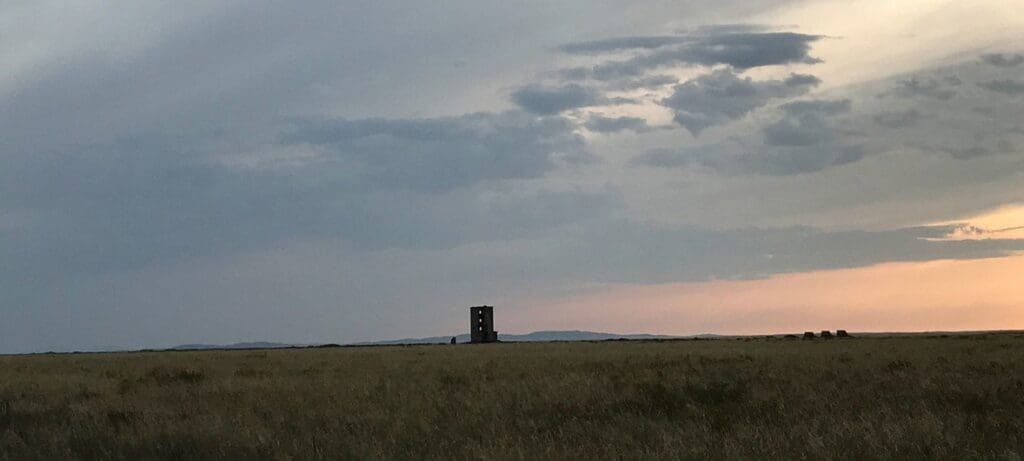
UN News/Nargiz Shekinskaya | A view of ‘ground zero’ at the Semipalatinsk Test Site in Kurchatov, Kazakhstan. Remote Semipalatinsk was once the Soviet Union’s primary test area for nuclear weapons
Central Asia celebrates 20 years as a nuclear-weapon-free zone
Semipalatinsk, Kazakhstan was once the Soviet Union’s primary testing ground for nuclear weapons. Today, in an age of rising nuclear threats, the Semipalatinsk Treaty – which saw a group of Central Asian countries renounce nuclear weapons in 2006 – is more relevant than ever.
The accord, which brought together Kazakhstan, Kyrgyzstan, Tajikistan, Turkmenistan and Uzbekistan, enshrines the voluntary commitment of these States not to develop, acquire, test or deploy nuclear weapons.
“Nuclear-weapon-free zones (NWFZs) are not only historical achievements but also living instruments of regional security, non-proliferation and nuclear risk reduction,” says Christopher King, Chief of the Weapons of Mass Destruction Branch at the UN Office for Disarmament Affairs (UNODA).
Nations bound together
He notes that the Central Asian zone stands as an example of effective regional cooperation, bringing the five countries under a legally binding commitment.
“Such zones contribute to transparency, confidence-building and risk reduction, and they can help maintain a practical bridge between regional security concerns and global non-proliferation and disarmament architecture,” Mr. King adds.
First Deputy Minister of Foreign Affairs of the Republic of Kazakhstan Yerzhan Ashikbayev, who is leading the country’s delegation at the 2026 review conference of the Nuclear Non-Proliferation Treaty, also believes that its significance extends far beyond the region.
“The contribution of the Semipalatinsk Treaty to ensuring security not only in Central Asia but also beyond its borders, is undeniable,” he says.
According to the diplomat, the creation of the zone reflects a shared commitment by the countries of the region to strengthen peace, stability and security, and to overcome the legacy of nuclear testing.
Commitments questioned
Today, amid growing geopolitical tensions, some experts question the durability of such agreements. However, Mr. Ashikbayev disagrees. “On the contrary, in such critical periods the zone demonstrates that its existence is a positive factor,” he argues. Kazakhstan, he added, remains committed to multilateral diplomacy, with the further development of the zone forming part of that policy.
The Central Asian experience is drawing interest in other regions of the world but, as Ashikbayev pointed out, the establishment of such zones must be a sovereign decision of the States concerned.

At the same time, the legacy of the nuclear past continues to be felt today, particularly around the former Semipalatinsk test site, but rehabilitation programmes are under way.
A modern oncology centre has been established, and parts of previously restricted territories are, following a thorough assessment, gradually being returned to economic use.
The Central Asian Nuclear-Weapon-Free Zone
- Mr. King and Mr. Ashikbayev took part in a round table organised by Kazakhstan at UN Headquarters on Wednesday, marking the 20th anniversary of the Central Asian Nuclear-Weapon-Free Zone.
- Participants discussed how the agreement contributes to strengthening international security in an increasingly unstable global environment.
- The event took place on Tuesday, on the margins of the 2026 Review Conference of the Parties to the Treaty on the Non-Proliferation of Nuclear Weapons, currently underway at UN Headquarters.
- The event was recorded and can be seen on UN WebTV.
Nuclear-Weapon-Free Zones
The following treaties form the basis for the existing NWFZs:
- Treaty of Tlatelolco — Treaty for the Prohibition of Nuclear Weapons in Latin America and the Caribbean
- Treaty of Rarotonga — South Pacific Nuclear Free Zone Treaty
- Treaty of Bangkok — Treaty on the Southeast Asia Nuclear Weapon-Free Zone
- Treaty of Pelindaba — African Nuclear-Weapon-Free Zone Treaty
- Treaty on a Nuclear-Weapon-Free Zone in Central Asia